Search Results for ""Titan II Missile Silo 570-9" OpenStreetMap node id"

Property or Not? Bitcoin Thieves Released Because “Bitcoin is Not Property”
A Russian Court recently ruled a Bitcoin theft case as innocent, stating that Bitcoin was not considered a property. The victim sought restitution, after being robbed of 100 Bitcoins.

Chinese Bank Partially Owned by the Government Invests in Nervos STO
The Nervos Network security token offering (STO) has aimed to start on Oct. 16, to raise an undisclosed amount within two weeks via the CoinList platform.

Traversing Through the Crypto Regulatory Landscape in 2019
Blockchain and crypto regulation has seen its ups and downs in 2019, with endless regulators evolving along with the realm of the new technology development and use cases. From countries that view blockchain as a threat to learning to embrace the technology; let’s have a look at some of the major regulatory changes in 2019.

Peertec Joins Hands with Penta Security for Blockchain-Enabled Infrastructural Security
Peertec, a leading blockchain-focused fintech firm, has revealed its strategic collaboration with Penta Security, a highly valued web and data security company. The partnership is expected to boost Peertec’s infrastructure security using blockchain technology. The safety of its GDAC cryptocurrency exchange and services is also expected to be strengthened.

China Updates Smart City Infrastructure with Blockchain-Based City Identification System
China Updates Smart City Infrastructure with Blockchain-Based City Identification System

LINE Messaging App Launches Digital Asset Wallet and Blockchain Platform to Run Dapps and Tokens
LINE communications app recently launched a new blockchain digital wallet that can be used to manage various crypto assets.

Data-Hungry: Official Trump 2020 Election App Collects User Data of Voters
US president Donald Trump’s campaign app “Official Trump 2020 App” raised a lot of skepticism, as it has been uncovered that the election app collected mast amounts of sensitive information on his voters.

Hackers Demand $1 Million in Bitcoin Ransom After Hacking Computer Systems of Insurance Firm
Israeli’s largest insurance company fell victim to hackers this week and must pay huge amounts of funds in cryptocurrency to regain access to its data.

Bitcoin Cash (BCH) Hard Forks into Two New Blockchains Following Disagreement on Miner Tax
Bitcoin Cash (BCH), a hard fork from Bitcoin, has once again split and created two new blockchains after a disagreement between two BCH clients.

Ethereum Hits Major Bullish Milestones in Anticipation of the ETH 2.0 Staking Upgrade
Ethereum wallets containing 32 more or more ETH, the amount needed to stake a validator node under the upcoming ETH 2.0 upgrade has hit an all-time high. The number of Ethereum network balances with 32 ETH or more has been nearing 120,000, in anticipation of the proposed ETH 2.0 update. Validating nodes will be replacing miners in the current proof-of-work system to validate transactions to maintain the Ethereum blockchain. Over the year, the number of wallets holding at least 32 ETH has risen around 15 percent, according to Nansen AI. Although the ETH 2.0 upgrade has been delayed several times, the major upgrade is expected to be deployed in July.
Cardano’s Shelley Hard Fork Successful, Network on its Way to Become the World’s Financial Operating System
Cardano’s second developmental phase, Shelley has been successfully launched, the hard fork was successful in transforming Cardano into the Shelley era from Byron.The hard fork took Cardano from its Byron era to Shelley, to enable the network to become more decentralized and autonomous.
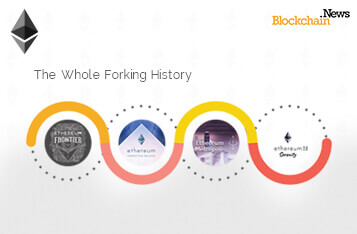
Ethereum—The Whole Forking History
Ethereum is the second most recognizable name in the cryptocurrency and blockchain space, next to Bitcoin. Ethereum was created to overcome the limitations of Bitcoin, which is essentially just a system for decentralized money, and push the boundaries of blockchain technology and decentralization. Like Bitcoin, it is supported by a peer-to-peer node network, meaning that it is essentially a decentralized server run by a vast number of computers with no central administrator or intermediary.