
Search Results for "digital commerce"

Perianne Boring: Fostering Blockchain Through Regulatory Uncertainty
Perianne Boring is the President and Founder of the Chamber of Digital Commerce, the world's first and largest blockchain trade association. Boring began her career as a legislative analyst in the U.S. House of Representatives, advising on finance, economics, tax, and healthcare policy. Prior to forming the Chamber, Boring was a television host and anchor of an international finance program that aired in more than 100 countries to over 650 million viewers.

Chinese E-Commerce Giant JD.com Launches Enterprise-Level Blockchain-Based Smart Contracts
Chinese e-commerce giant JD.com, also known as Jingdong, has successfully launched two enterprise-level applications, including blockchain-based smart contracts, and the protection of commercially confidential information. These two applications were launched on JD’s independently-developed proprietary blockchain, JD Chain. The JD Chain blockchain framework was made open sourced around a year ago, five months after the company launched the JD Blockchain Open Platform enabling companies to use JD’s platform using pre-built APIs. The blockchain protocol has been opened up to allow enterprises to built custom solutions.

Thai Central Bank Issues Stern Warning about Thai Baht Digital (THT) Stablecoin
The Bank of Thailand is warning citizens against using the illegal THT stablecoin.

Blockchain Technology Implemented into Indonesia's Digital Economy
Bank Central Asia (BCA) is campaigning for Indonesian financial businesses to innovate and adopt blockchain technology to support its digital economy amidst rapid technological revolution.

China to Test its CBDC on Tencent-Backed Platform and Other Domestic Firms to Break Dependence on the US
China’s central bank has taken another major step forward toward the digital yuan’s mass adoption with its testing on food delivery giant Meituan Dianping. Backed by Tencent, Meituan has been having discussions with the People’s Bank of China’s central bank digital currency (CBDC), also known as digital currency electronic payment (DCEP) research wing.

Bank of Japan Testing Digital Yen CBDC
The Bank of Japan (BoJ) has just announced that it will begin experimenting with a Digital Yen, its own Central Bank Digital Currency (CBDC) to test its technical application and feasibility.

Reebonz Tracks Provenance of its Luxury Products Using a Vechain-Powered Digital Certificate
Reebonz, the biggest luxury e-commerce company in Asia Pacific and Southeast Asia, has incorporated blockchain technology into its ecosystem to determine the provenance of its products.

KPMG Study Confirms US Consumers Are Ready to Use Blockchain Digital Tokens
Data don’t lie. New research from KPMG investigated how consumers feel about the application of blockchain digital tokens. It turned out that consumers believe that the blockchain-baked tokenization could significantly transform the way businesses interact with the public. But it emerged that most businesses have not embraced the new technology. Now, you can guess the implications.
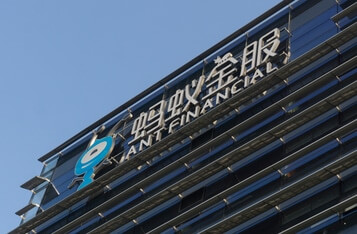
Ant Group Partners with Dell, Hewlett-Packard and Lenovo to Enable Access for its New Blockchain Solution—AntChain
Ant Group, formerly known as Ant Financial, the payments arm of Chinese e-commerce giant Alibaba, has launched a new blockchain solution, AntChain. Ant Group has signed an agreement with Dell, Hewlett-Packard, and Lenovo to enable accessibility of IT leasing services for small to medium enterprises (SMEs) through the AntChain blockchain solution.

COVID-19 Pandemic-Induced Crisis is Pushing CBDC Adoption, says Bank of Russia
Financial regulators are keeping a keen eye on central bank digital currencies (CBDCs) because they see them as silver linings.

Canada to Become the Global Leader in the Blockchain Industry, Report Indicates
In a recently published report by the Canadian Chamber of Digital Commerce showed that Canadians in the blockchain industry are amongst the highest-earning salaries in the country. The report also noted that Canadian blockchain companies want more legal clarity, to understand where their government stands regarding regulation in Canada.

Knowledge of Design Week 2020 Connects 10,000 Innovative Minds to Co-create a Digital Future with Design
Knowledge of Design Week (KODW) 2020, organised by Hong Kong Design Centre (HKDC) with Create Hong Kong (CreateHK) of the Government of the Hong Kong Special Administrative Region (HKSAR Government) as the Lead Sponsor, officially concluded its successful debut as a virtual event. Livestreamed from Hong Kong over four days (26 to 29 August), KODW 2020 connected innovative leaders with the global community through over 15 thematic sessions, interactive remote workshops and an exclusive online community and networking platform.